Inside the Factory Where Your Album Is Born
One large black sheet of matte paper is fed into a huge printing machine by hand. Air gets blown passed it, so it won’t stick to any sheet beneath it. On a screen nearby, a woman checks the order number and a dozen other details, making sure everything matches before a single mark is printed.
Then the sheet disappears into the machine for its first layer of glue, outlined exactly as the letter font was chosen. Rollers spin. Robotic arms move. The sheet flies — and I mean flies — to the next station, which is about three armlengths further, faster than your eye can follow.
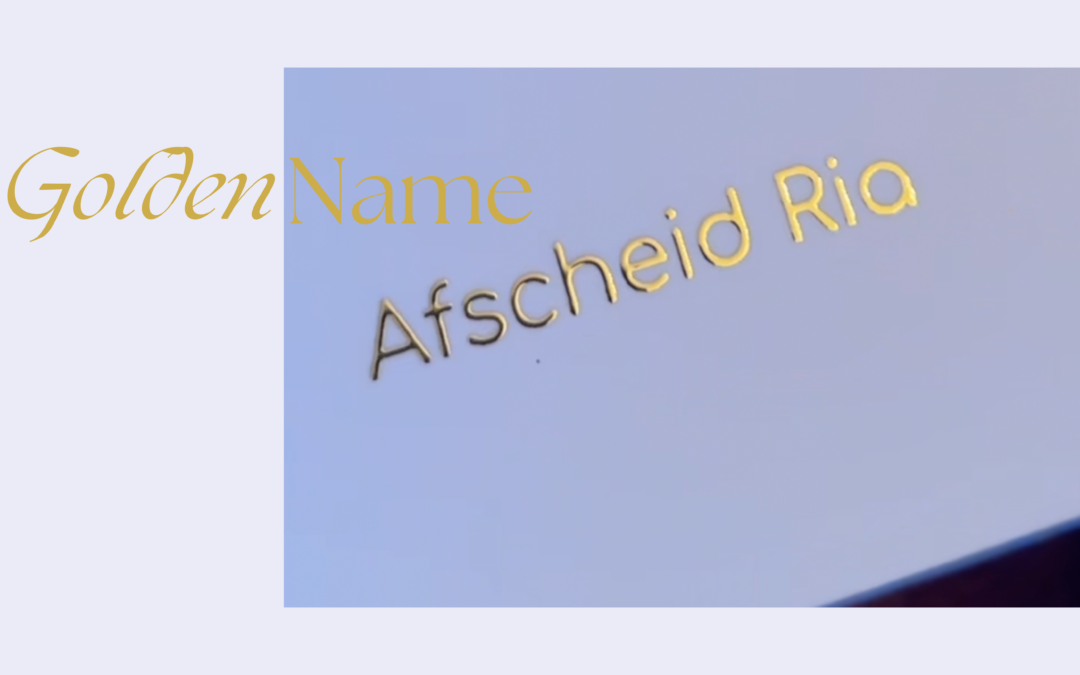
Through a viewing window, you can see a roll of gold-colored foil hanging, waiting. Tiny letter shapes are stamped out of it and pressed onto the glue in an instant. No drying time needed — that part of the process has already happened inside the machine ( maybe during the flying time…?, before the sheet even reaches the end of the line). What comes out is a fly-page carrying a name in gold, the kind of lettering you’d expect on a film award. This one is meant for the first page in an album.
I stood there and watched this happen, and I felt something I hadn’t expected: quiet awe.
See this iPhone recording of opening an album and seeing the letters on the flypage:
Why I Was Standing in a Factory in Poland
Together with fellow photographer Rob de Joode (also from the Netherlands), I traveled to nPhoto‘s factory in Rzeszów, Poland, at the invitation of Kees van Kaam, director of nPhoto Netherlands. As farewell photographers, we were given access most people never get — a full look at how an album is actually made, from the moment an order comes in to the moment it’s packed and shipped.
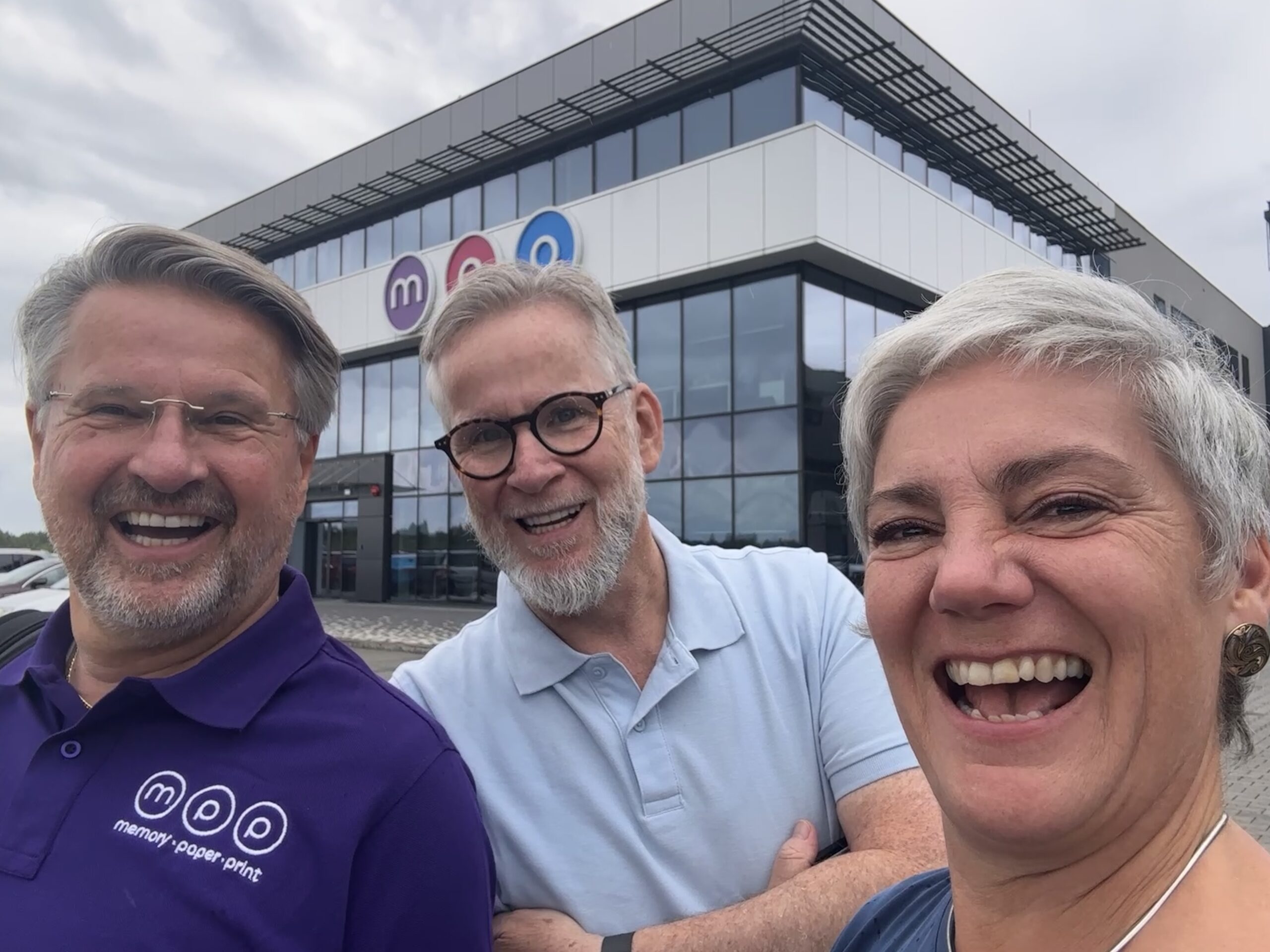
See us here in front of the building MPP (Memory Paper Print) where the albums are made:
What we saw changed how I think about this craft entirely. Machines the size of elephants, each calibrated to a single type and size of photopaper. Covers cut to precise measurements, folded by hand at every corner. Barcodes tracking every single component, from the first sheet to the final box, so that nothing — ever — ends up in the wrong album.
And that gold-lettering machine is only one small part of a process involving hundreds of steps and dozens of people, many of them working with their hands, despite all the robotics surrounding them.
Something Is Coming — And I Can’t Tell You Yet
Here’s where it gets harder for me to write, because I want to tell you more than I’m allowed to.
While we were there, we were photographed and filmed for a marketing campaign that’s currently in the works. I can’t share details yet — the supplier is being careful, for reasons I understand: farewell photography as a dedicated product category is still new outside the Netherlands, and nobody wants to hand competitors a head start before launch.
I’ve been asked to play a part in bringing something new to the international stage. In the Netherlands, this kind of memorial album work has grown into a mature, respected part of our profession. Elsewhere, it’s still finding its footing. I’ll have more to share soon — and when I do, you’ll be among the first to hear it.